
What Is Iboga
This information is provided for educational purposes only and is not intended as medical advice.
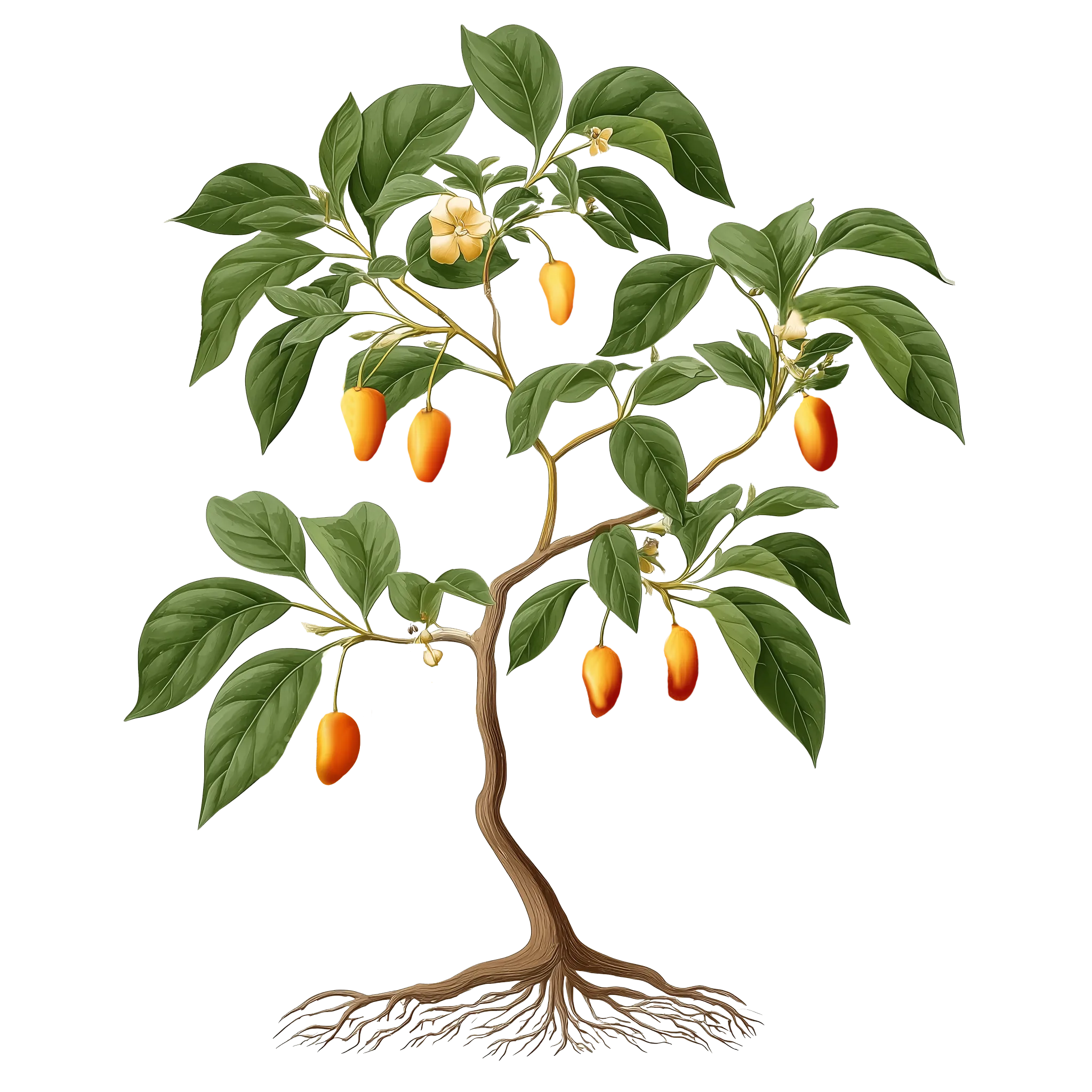
Iboga (Tabernanthe iboga) is a perennial rainforest shrub native to Central West Africa, primarily Gabon and Cameroon. In the Bwiti tradition, it's been used for generations as a sacrament for spiritual initiation, ancestor communication, and life guidance. In the West, it gained attention as the only substance demonstrated to interrupt opioid addiction, often in a single session.
Those are two very different frames for the same plant. Both are true.
The root bark.
What's used in ceremony is the root bark of the iboga shrub. Whole root bark contains dozens of alkaloids, over 80 have been identified. The most studied is ibogaine, the primary psychoactive alkaloid. When ibogaine is isolated and purified, it becomes ibogaine HCl, the form used in clinical settings.
The distinction matters. Whole root bark and isolated ibogaine are not the same experience. Root bark contains the full spectrum of alkaloids working together. Ibogaine HCl is a single molecule extracted from that spectrum. Both are powerful. Both carry significant medical risks. The traditional Bwiti approach uses whole root bark. Most clinical and detox settings use ibogaine HCl.
How the alkaloids work.
This is where iboga diverges from every other psychedelic. Classical psychedelics, psilocybin, LSD, DMT, work primarily through one receptor system: serotonin 5-HT2A. Ibogaine interacts with a dozen systems simultaneously.
It binds to NMDA receptors, opioid receptors (mu, delta, kappa), serotonin transporters, dopamine transporters, sigma receptors, and sodium channels. No other known substance has this breadth of receptor interaction. This is why researchers describe it as a neurological reset rather than a psychedelic experience, it's not just changing perception, it's reorganizing the hardware.
Your liver converts ibogaine into noribogaine, which has a half-life of 24–48 hours. Noribogaine may be primarily responsible for the lasting anti-addictive effects, it continues working in your system long after the acute experience ends. This is also why the experience lasts so much longer than other psychedelics: 24–36 hours acute, with residual effects for days.
How ibogaine interrupts addiction.
The addiction interruption mechanism is multi-layered. It's not doing one thing, it's doing several things simultaneously:
Opioid receptor resetting, ibogaine appears to reset opioid receptors to a pre-addicted state, dramatically reducing or eliminating withdrawal symptoms.
Dopamine normalization, it modulates the dopamine system, reducing the neurochemical drive behind cravings.
GDNF upregulation, ibogaine stimulates Glial Cell Line-Derived Neurotrophic Factor, which supports the growth and repair of dopamine neurons. This is neuroprotective and may be responsible for longer-term recovery effects.
Disruption of drug-seeking associations, the psychological component. The visionary experience forces confrontation with the origins and consequences of addiction in a way that rewires the associative networks around substance use.
Enhanced neuroplasticity, the 2–12 week window after ibogaine creates heightened neuroplasticity, meaning the brain is more capable of forming new patterns. This is why integration during this window is critical, the brain is literally more changeable than usual.
None of this is a cure. Ibogaine creates an opportunity. What you do with that opportunity determines the outcome.
Metabolism and timeline.
How iboga compares to other psychedelics.
Classical psychedelics (psilocybin, LSD, DMT): primarily serotonin 5-HT2A. Duration 4–12 hours. Minimal cardiac risk. The experience tends toward the cosmic, abstract, or emotional. No demonstrated addiction interruption.
Ibogaine: dozen-plus receptor systems. Duration 24–48 hours. Significant cardiac risk. The experience is personal, biographical, confrontational, you see your own life replayed. Opioid withdrawal interruption is unique to ibogaine among all known substances.
Ketamine: legal in many contexts, short duration (1–2 hours), some antidepressant effects. Has its own addiction potential. Different mechanism entirely.
Ayahuasca: rich spiritual tradition, strong visionary component, serotonergic mechanism. No demonstrated anti-addiction pharmacology. Different kind of work.
Have questions about whether iboga is right for your situation?
Start a conversation